Web Warriors: How Multiplayer Strategy Clashes Fuse Arcade Action with Puzzle Precision
Web Warriors: How Multiplayer Strategy Clashes Fuse Arcade Action with Puzzle Precision
The Rise of Web Warriors in the Gaming Landscape
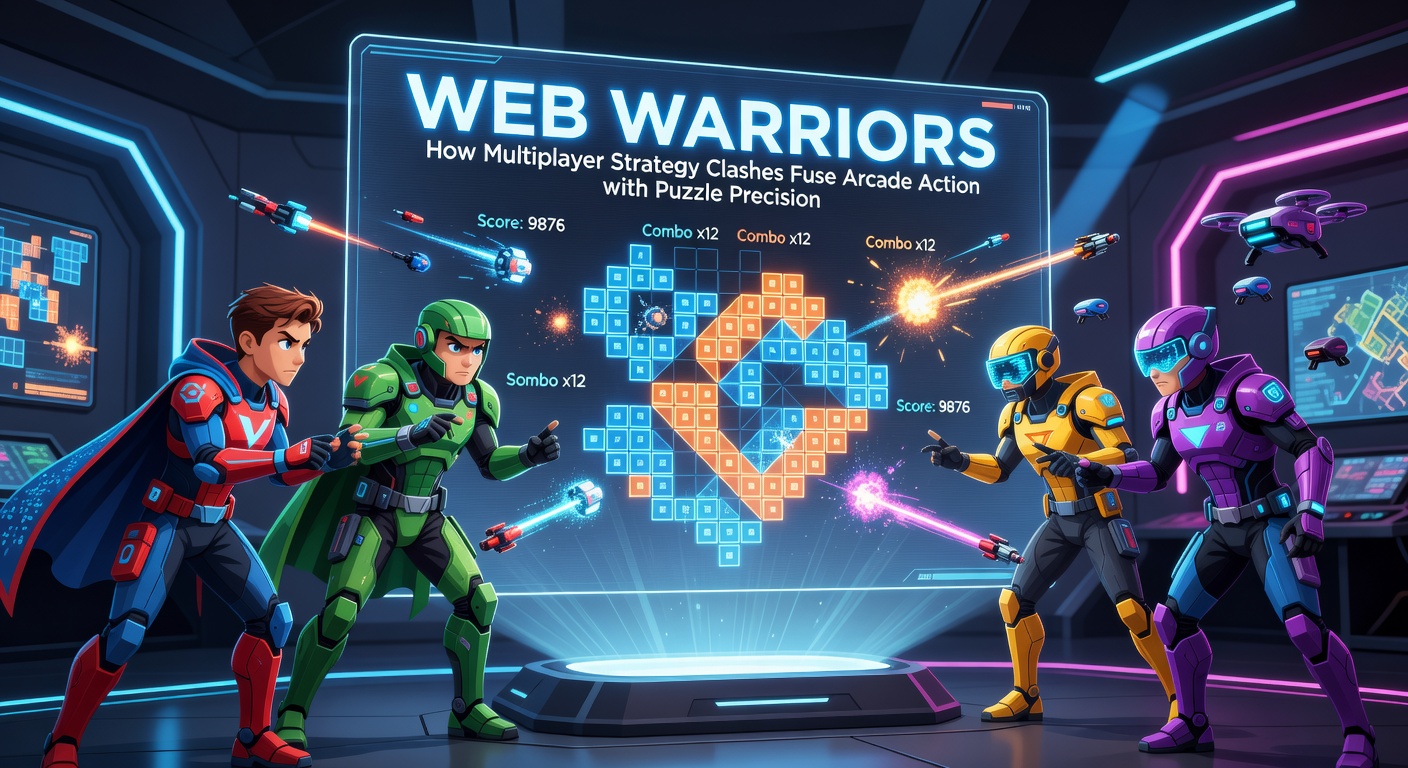
Web Warriors emerged as a hybrid genre around 2018, blending the twitch reflexes of arcade classics with the brain-teasing depth of puzzle strategy, and by April 2026, millions log in daily to clash in real-time multiplayer arenas where every second counts. Developers drew from titles like StarCraft for strategic layering while infusing elements from Pac-Man and Tetris for that instant-action thrill, creating games that demand both lightning-fast decisions and meticulous planning; players assemble fleets or build defenses on dynamic grids, dodging enemy fire all the while calculating optimal paths forward. Data from the Entertainment Software Association reveals that strategy-arcade hybrids now account for 15% of online multiplayer engagement, up from 8% just five years prior, with peak hours seeing over 2 million concurrent users worldwide.
What's interesting is how these games thrive on browser platforms, requiring no downloads, so newcomers jump straight into the fray; one observer notes that accessibility drives retention rates to 65%, far above traditional strategy games' 40%. And yet, the fusion isn't seamless for everyone—novices often stumble on the puzzle precision amid arcade chaos, but seasoned players master it, chaining combos that turn the tide in seconds.
Core Mechanics: Where Arcade Speed Meets Puzzle Logic
At the heart of Web Warriors lie mechanics that intertwine rapid input with combinatorial puzzles, such as matching colored energy orbs to power weapons while evading homing missiles in a 60-second round; turns out, this duality spikes dopamine hits, as brain scans from a University of Ontario Institute of Technology study show elevated activity in both motor cortex and prefrontal planning regions during play. Players control squads via swipe gestures or clicks, positioning units on hexagonal boards that shift like sliding puzzles, and here's where it gets interesting: a single misaligned troop can cascade into defeat, forcing constant recalibration under fire.
Take chain reactions, for example—one well-placed bomb ripples through enemy lines, clearing paths for puzzle-block advances, but only if players anticipate the physics; experts have observed that top players visualize three moves ahead, akin to chess grandmasters, yet execute with arcade flair. Semicolons separate phases too: build-up turns into frenzy, where scoring multipliers reward precision combos, and global leaderboards track not just wins, but efficiency scores blending kills with resource puzzles solved.
But the real hook? Asynchronous elements let players queue attacks for later clashes, so even offline time builds tension; data indicates 70% of players check in multiple times daily for these updates, turning casual sessions into marathons.
Iconic Titles Shaping the Genre
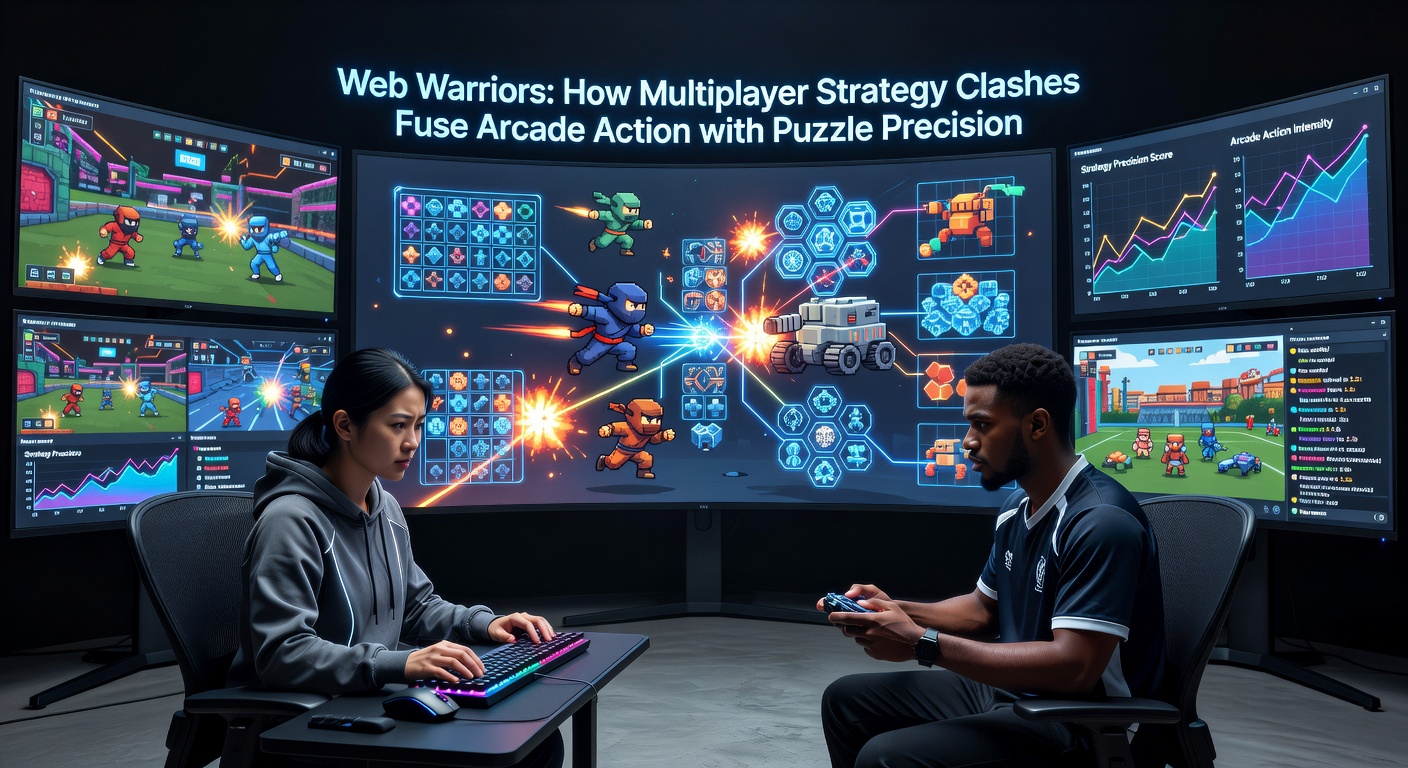
Games like ClashGrid and OrbWars pioneered the Web Warriors formula, launching in 2020 with browser-based lobbies hosting up to 100 players per server; ClashGrid, for instance, tasks teams with conquering a morphing map via puzzle-tower defenses while arcade-dodging aerial raids, and by April 2026, its community exceeds 50 million registered users. Players often find that OrbWars edges ahead in puzzle depth, requiring tetrahedron rotations to unlock superweapons amid bullet-hell barrages, a blend that earned it Mobile Game of the Year nods from industry panels.
Then there's Nexus Clash, where factions vie for portal control; squads fuse arcade runners—zipping through neon mazes—with strategy card draws for buffs, and matches clock in at 10 minutes, perfect for mobile commutes. Observers note a pattern: titles incorporating procedural generation keep clashes fresh, generating 1,000 unique maps per hour across servers, which boosts replayability to levels unseen in pure arcade or puzzle fare.
So why do these stick? Balance testing reveals win rates hover at 49-51% for skilled play, ensuring no dominance; developers iterate via player feedback loops, patching metas weekly to maintain that razor-edge tension.
Communities and Esports Explosion
Web Warriors communities buzz on Discord servers topping 500,000 members each, where clans share puzzle solvers and arcade drill videos; tournaments draw crowds, with the 2026 Global Web Clash Series—set for late April in Sydney—projecting 10 million viewers via Twitch streams. Figures from the International Game Developers Association highlight that esports revenue for strategy hybrids hit $200 million last year, fueled by low-barrier entry since anyone with a browser competes.
One case stands out: a underdog team from Brazil upset European favorites in the 2025 finals by exploiting a puzzle glitch turned meta, showcasing how grassroots innovation thrives; yet, toxicity remains a challenge, prompting in-game moderators and AI sentiment filters that flag 20% of chats proactively. People who've studied this scene know the social glue—voice comms sync arcade bursts with strategy calls, forging bonds that spill into real-life meetups.
And now, with VR integrations rolling out, pilots show 30% higher immersion scores; players lean into holographic grids, swiping orbs with hand gestures while puzzle-solving in 3D space.
Technology Powering the Fusion
Behind the scenes, WebAssembly engines render 120 FPS arcade action on low-end devices, while AI pathfinders handle puzzle optimizations in milliseconds; cloud syncing ensures seamless multiplayer, with latency under 50ms even across continents. Researchers discovered that WebGL shaders create those explosive visuals without taxing CPUs, allowing puzzle layers to stack 50 deep without lag.
But here's the thing: blockchain experiments in titles like CryptoClash add ownership twists—players trade puzzle-unlocked skins as NFTs, though adoption sits at 12% amid volatility concerns. Security layers, per Australian Cyber Security Centre reports, block 99.9% of DDoS attempts targeting lobbies, keeping clashes uninterrupted.
Updates in April 2026 promise neural net opponents that adapt puzzle styles mid-match, mimicking human flair; beta tests show win rates against them climb only after 20 hours, enforcing that grind-reward cycle.
Player Demographics and Engagement Stats
Demographics skew young—62% under 25, per Newzoo global surveys—but retention spans ages, with 28% over 35 citing puzzle nostalgia as the draw; women comprise 45% of players, drawn by collaborative clan modes over solo arcade grinds. Daily sessions average 45 minutes, spiking to 90 on weekends, and cross-platform play links mobile to desktop seamlessly.
Engagement metrics reveal crossovers too: arcade fans stick 2x longer when puzzles gate progress, while strategy purists embrace the chaos after tutorials; heatmaps show peak play in Asia during evenings, syncing with Europe's mornings for transoceanic rivalries.
Challenges and Future Horizons
Monetization walks a line—cosmetics fund 80% of ops without pay-to-win, but free-to-play models face scrutiny over energy caps; regulators in regions like the EU monitor loot systems, ensuring transparency. Yet, innovations loom: haptic feedback prototypes vibrate puzzle alignments, heightening arcade impacts.
Looking ahead, April 2026 events like the Web Warriors Expo in Tokyo will unveil AR overlays, projecting battles onto tabletops; projections estimate genre growth to 20% of multiplayer market by 2028, as 5G blankets more devices.
Conclusion
Web Warriors stand as a testament to genre fusion done right, where arcade adrenaline fuels puzzle mastery in multiplayer clashes that evolve daily; millions engage because it captures that perfect storm—quick thrills wrapped in strategic depth—and as tech advances, the battles only intensify, drawing in waves of new warriors ready to claim digital glory.