Tracing the Thread: Puzzle Solving Techniques Applied to Strategy Elements Within Online Sports Simulations
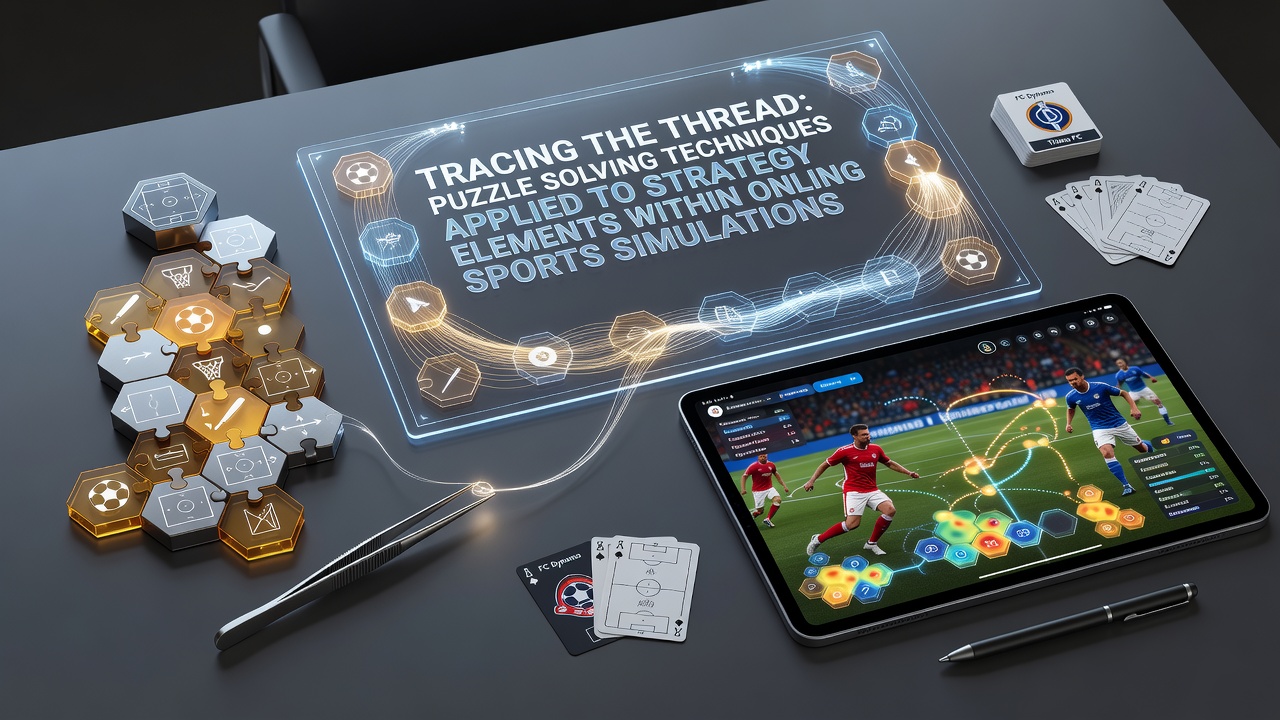
Online sports simulations blend real-time decision making with layered strategy systems that often mirror the mechanics of traditional puzzle games, and developers have drawn from cognitive frameworks like constraint satisfaction and pattern matching to build these experiences. Players navigate complex variables such as player attributes, formation constraints, and opponent behaviors in titles that simulate football leagues, basketball franchises, or racing circuits. Research from institutions including the University of Alberta's games research group shows how these elements create branching decision trees that reward systematic analysis over pure reflexes.
Foundations of Puzzle Integration in Strategy Layers
Strategy elements in sports simulations frequently incorporate core puzzle techniques such as spatial reasoning, resource allocation under limits, and sequential problem decomposition, and these methods appear in roster construction modules where salary caps function like knapsack problems. Game designers apply graph theory to model passing networks or defensive alignments, turning each match into a dynamic optimization task. Data from the Entertainment Software Association indicates that strategy-heavy sports titles accounted for a growing share of multiplayer engagement metrics through mid-2025, with continued expansion projected into the following year.
Observers note that online platforms amplify these puzzle aspects by introducing persistent leagues and real-time matchmaking, which forces players to adapt solutions across multiple sessions rather than isolated matches. Constraint propagation emerges naturally when users balance fatigue systems, chemistry ratings, and tactical instructions before each fixture.
Pattern Recognition and Adaptive Planning
Players who succeed in these environments often rely on rapid identification of recurring motifs in opponent tendencies, a skill directly transferable from tile-matching or logic grid puzzles. Simulation engines track thousands of variables per game tick, yet effective strategies reduce this complexity through heuristic shortcuts developed via repeated exposure. Studies published by the IEEE Games Technical Committee highlight how machine learning models trained on player data reveal clusters of successful tactics that resemble solution paths in combinatorial puzzles.
Season-long campaigns add temporal layers, requiring users to plan around transfer windows and injury cycles while anticipating league-wide shifts. This creates multi-stage problems where early choices constrain later options, much like sudoku cells that propagate effects across the grid. In July 2026, several major simulation platforms introduced updated AI opponents that dynamically adjust to detected player patterns, increasing the emphasis on novel rather than memorized sequences.
Case Applications Across Genres
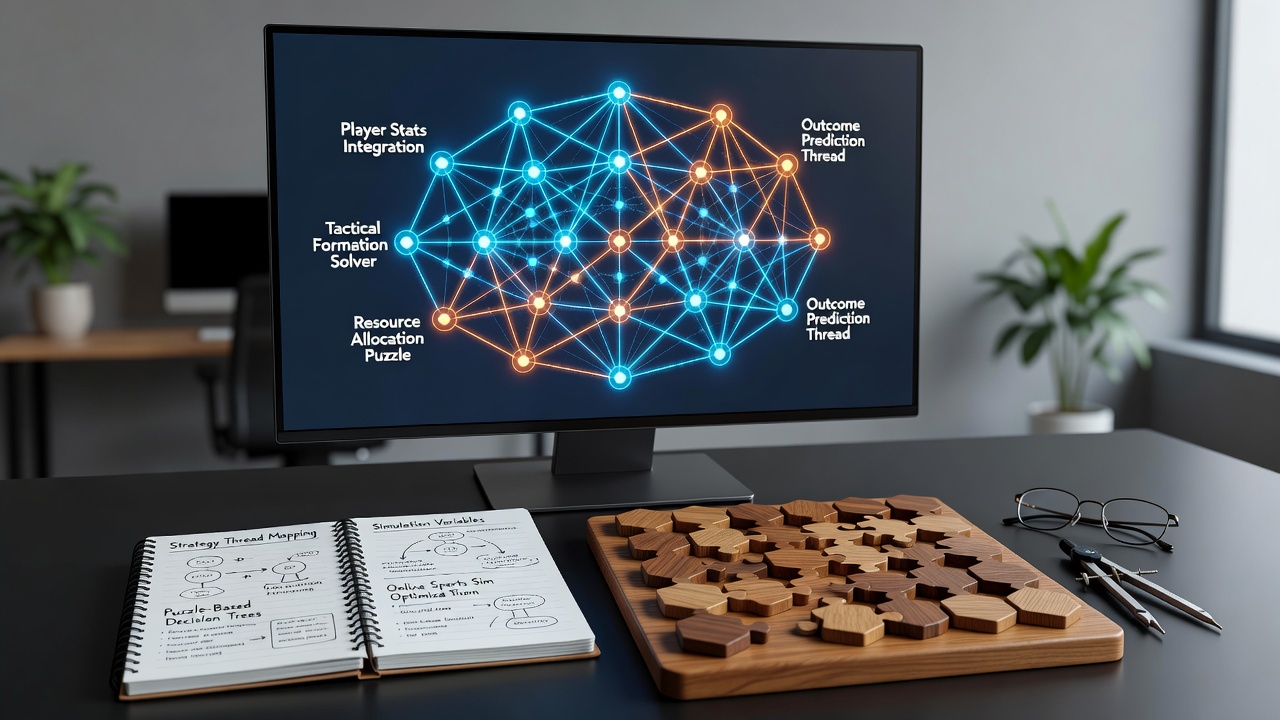
Football management simulations demonstrate these connections clearly through scouting networks that function as information-gathering phases before the main optimization puzzle begins. Users must weigh positional needs against budget limits and development timelines, creating trade-off matrices similar to those found in operations research problems. Racing simulations apply route optimization and pit-stop timing puzzles, where fuel loads and tire compounds interact under changing track conditions.
Basketball and hockey titles layer zone defense assignments onto real-time execution, turning defensive setups into spatial allocation challenges. Community forums and analytics sites document how top performers break matches into subproblems, solving for immediate possession value before recalculating broader win probabilities. Industry reports from the Interactive Games and Entertainment Association in Australia note rising participation in competitive online leagues that reward this analytical approach.
Technical Implementation and Player Tools
Modern engines support these puzzle elements through modular interfaces that expose probability calculators, heat maps, and historical trend viewers, allowing users to test hypothetical lineups without committing resources. Developers integrate scripting languages and API access in some platforms so advanced players can automate routine optimization steps. This mirrors how puzzle enthusiasts create solvers for repeated challenges, freeing cognitive load for higher-level strategy.
Network effects in online modes further complicate the puzzle space because collective player behavior alters market prices and meta formations over time. Those who monitor patch notes and community data maintain an edge by updating their internal models faster than competitors. Evidence from academic simulations at institutions across Canada and the European Union demonstrates that hybrid human-AI teams outperform either alone when tackling these evolving constraints.
Conclusion
The application of puzzle solving techniques to strategy elements within online sports simulations continues to deepen as engines grow more sophisticated and player bases expand their analytical capabilities. Developers refine these systems through iterative updates that introduce new variables while preserving core decision structures. Players benefit from recognizing the underlying logic puzzles and developing systematic approaches that transfer across different simulation genres. As platforms evolve through 2026 and beyond, the thread connecting puzzle mechanics to strategic depth remains central to competitive engagement in this category.