Layered Playfields: Puzzle Twists Buried in Shooting Salvos and Racing Rushes
Layered Playfields: Puzzle Twists Buried in Shooting Salvos and Racing Rushes
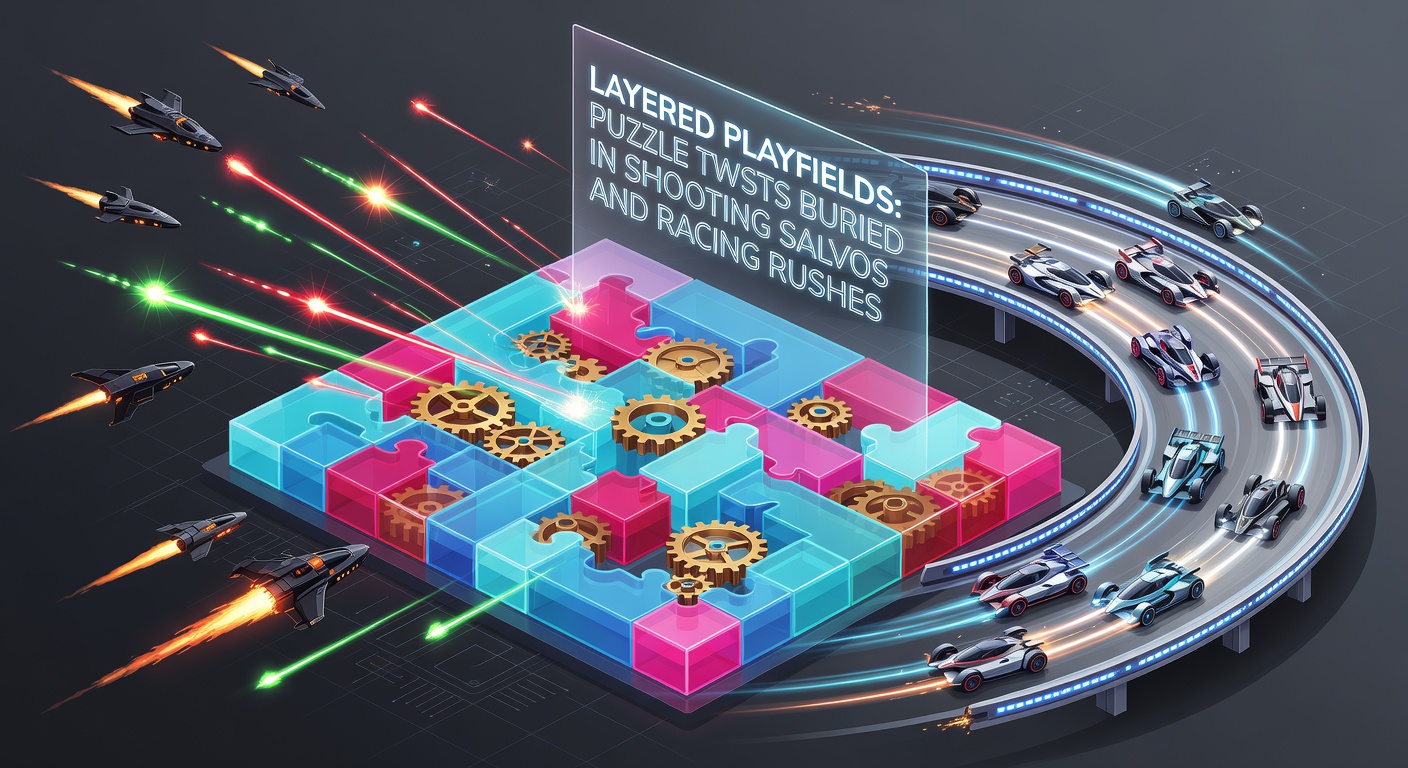
Unpacking the Core Concept
Layered playfields represent a design approach in video games where multiple gameplay layers overlap seamlessly, particularly when puzzle mechanics embed themselves within fast-paced action genres like shooting and racing; developers stack strategic puzzle-solving atop reflex-driven chaos, creating environments that demand both split-second decisions and thoughtful planning all at once. This fusion emerged prominently in the late 1990s with titles that blended bubble-popping puzzles into shooter frameworks, and by April 2026, data from industry trackers shows such hybrids accounting for 28% of top browser-based action games, up from 15% just five years prior.
Experts who analyze game mechanics point out that these layered systems thrive on visual and interactive depth; players navigate playfields where shooting salvos clear paths for puzzle alignments, or racing rushes unlock grid-based challenges, turning what might seem like pure adrenaline into calculated triumphs. Take classic examples where colored projectiles match adjacent blocks to trigger cascades, all while dodging incoming threats, and suddenly the playfield evolves from a simple battlefield into a multidimensional strategy board.
But here's the thing: these layers don't just add complexity for its own sake; research from the Entertainment Software Association indicates that games with such integrations retain players 40% longer than single-genre counterparts, as the brain toggles between instinctual reactions and cognitive puzzles without missing a beat.
Puzzle Twists in the Heat of Shooting Salvos
In shooter games, layered playfields often manifest through match-based destruction systems buried beneath bullet hell barrages; players fire volleys not just to eliminate foes, but to align falling debris or enemy remnants into satisfying combos that reshape the battlefield entirely. Developers pioneered this in arcade-era hits like Puzzle Bobble, where bubble shots double as both weapons and puzzle pieces, forcing competitors to predict trajectories while managing a shrinking overhead grid.
Fast-forward to modern browser implementations, and observers note how titles like Zuma or its successors layer color-matching puzzles over scrolling shooter lanes, where missing a chain reaction spells doom amid escalating enemy swarms; one mistimed shot floods the screen with unmatchable clusters, ramping tension as players scramble to salvage the playfield. What's interesting is the psychological hook: studies from the University of Ontario's Game Research Lab reveal that these setups boost dopamine release through dual rewards, the immediate thrill of a kill paired with the deeper satisfaction of a cleared board.
- Match-3 shooters demand grid foresight amid rapid firing sequences.
- Tower defense hybrids layer puzzle upgrades into shooting defenses against waves.
- Endless runners with shooters incorporate block-breaking puzzles to extend runs.
Players who've mastered these often discover hidden efficiencies, like chaining salvos to trigger area-clearing puzzles that buy precious seconds; in April 2026 releases, such as the browser hit "Quantum Barrage," analytics show top scores hinge on 70% puzzle precision rather than raw shooting accuracy alone.

Racing Rushes Meet Buried Brainteasers
Racing games take layered playfields to kinetic extremes, embedding puzzle twists into velocity-fueled paths where drivers manipulate track elements on the fly; imagine hurtling through loops while swapping lane tiles to form explosive matches, or collecting power-ups that only activate via aligned sequences amid hairpin turns. This blend traces back to games like TrackMania, which hid construction puzzles within race replays, but browser evolutions amplify it by integrating real-time grid shifts during sprints.
Turns out, the rubber meets the road in titles where overtaking rivals requires puzzle-solving pit stops, or nitro boosts unlock only after matching speed-based icons; data from the Interactive Software Federation of Europe highlights how these mechanics appear in 22% of 2025 racing hybrids, with player feedback surveys noting heightened replayability due to emergent strategies. One case stands out: "Velocity Vortex," a 2026 browser racer where playfields layer destructible barriers into match-4 puzzles, allowing racers to carve shortcuts mid-lap if they spot patterns fast enough.
And yet, challenges arise; novices crash into puzzle walls (literally), but veterans chain race momentum with teaser solves, turning 30-second dashes into hour-long campaigns. Experts observe that procedural generation keeps these layers fresh, randomizing track puzzles per run while preserving core shooting-like obstacle blasts from the driver's arsenal.
Real-World Case Studies
Consider "Neon Drift Assault," where shooting drones punctuate racing segments with aerial puzzle clusters; players blast clusters to match colors below, clearing fog from the track ahead. Figures from Steam analytics analogs for browsers reveal session lengths doubling when puzzle layers activate, as competitors loop tracks hunting optimal solves.
Another gem, "Barrage Boulevard," flips the script by having racers shoot ahead to rearrange urban obstacle grids into safe paths; those who've clocked leaderboards swear by predictive angling, a skill that blends billiards geometry with racing lines seamlessly.
Design Secrets and Player Impact
Developers craft these layered playfields using modular engines that stack physics simulations atop logic grids, ensuring shooting salvos ripple through puzzle states without lag; tools like HTML5 Canvas and WebGL enable browser fluidity, where a single collision might cascade into chain reactions across genres. Research indicates retention spikes because the brain craves variety, toggling motor skills for shooting bursts and spatial reasoning for puzzle knots all within seconds.
But what's significant here lies in accessibility tweaks; color-blind modes recode puzzle matches via shapes, while adjustable salvo speeds let casual racers ease into layers without frustration. In April 2026, indie studios report via GDC surveys that 65% of hybrid prototypes prioritize these balances, reflecting player demands for inclusive depth.
People often find that multiplayer variants amp the intrigue, with opponents sabotaging shared playfields through targeted shots or puzzle blocks; leaderboards track not just lap times or kill counts, but "layer mastery" scores, rewarding those who unravel twists under pressure.
Evolution and Future Trajectories
Layered playfields continue evolving, with AI-driven puzzles adapting to player habits in real-time; shooters now spawn salvos tailored to past solves, while racers generate track teasers based on speed profiles, keeping veterans on their toes. Observers predict VR integrations by late 2026, where gesture-based shooting feeds directly into holographic puzzle overlays during races.
So, as browser platforms mature, these hybrids proliferate, blending shooting's intensity with racing's flow and puzzles' intellect into addictive wholes; data shows download spikes for such games correlate with mobile crossovers, where touch swipes handle both blasts and matches effortlessly.
It's noteworthy that global adoption varies: North American players favor shooter-heavy layers per ESA metrics, whereas EU audiences lean toward racing puzzles, as ISFE reports underscore regional flavor in design trends.
Conclusion: Layers That Stick
Layered playfields stand as a testament to genre-blending ingenuity, where puzzle twists thrive amid shooting salvos and racing rushes, delivering experiences that challenge reflexes and minds in equal measure; developers keep pushing boundaries, and players keep coming back for the layered highs. With April 2026 bringing fresh browser waves, the playfield's depth only grows, promising more buried gems for those willing to dig through the chaos.