Arcade Traditions in the Browser Age: Integrating Multiplayer Strategy and Puzzle Mechanics
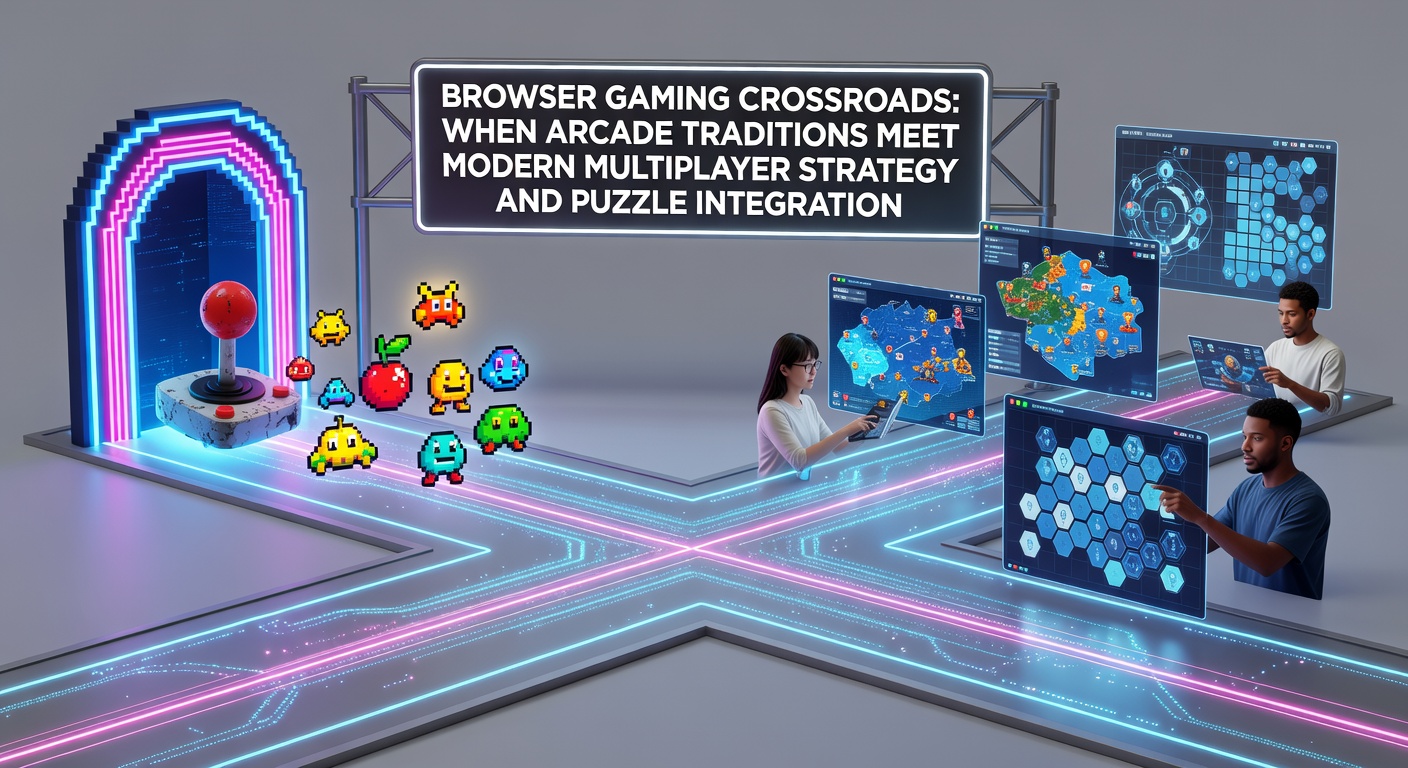
Browser gaming continues to evolve as developers combine the fast-paced reflexes of arcade classics with the depth of modern multiplayer strategy and puzzle systems, creating experiences that retain instant accessibility while adding layers of coordination and problem-solving. Data from industry tracking services shows browser-based titles maintaining steady player engagement through 2025 and into 2026, driven by improvements in web technologies that support real-time interactions without downloads.
Historical Foundations of Arcade-Style Mechanics in Browsers
Arcade traditions originated in physical machines that emphasized quick sessions, high scores, and simple controls, and those same principles transferred directly to early browser games built with HTML and JavaScript. Researchers at academic institutions such as the University of California documented how these constraints encouraged designers to focus on core loops that reward repeated short plays rather than extended campaigns. Over time developers retained the immediate feedback loops of shooters and platformers while expanding them into persistent worlds where multiple participants influence shared objectives.
Multiplayer Strategy Layers Emerge
Modern browser environments now host games in which teams coordinate resources across separate screens, drawing from real-time strategy formats that once required dedicated clients. Figures from the Entertainment Software Association reveal that participation in browser multiplayer modes grew steadily through late 2025, coinciding with wider adoption of WebRTC standards that reduce latency in competitive matches. Observers note that players frequently alternate between rapid individual actions and group planning phases, a pattern visible in titles where one participant manages defensive structures while others handle offensive maneuvers.
Case examples include browser adaptations of tower-defense hybrids that incorporate resource trading among remote users, and these systems demonstrate how arcade scoring systems persist alongside strategic decision trees. In May 2026 several platforms plan to roll out updated matchmaking tools that pair users based on both reaction speed and tactical preferences, further tightening the connection between legacy mechanics and contemporary group play.
Puzzle Integration Within Action Sequences

Puzzle elements appear embedded inside action frameworks rather than isolated as separate modes, requiring players to solve spatial or logic challenges while maintaining momentum. Studies conducted by European research groups such as the Interactive Software Federation of Europe indicate that this blending increases session length because participants remain engaged during both reflexive segments and deliberate planning intervals. One documented pattern shows racing sequences interrupted by brief tile-arrangement tasks that unlock shortcuts, preserving the urgency of arcade roots while introducing measurable strategic depth.
Designers achieve this fusion through modular level architecture that loads puzzle components on demand, ensuring performance stays consistent across varied devices. Data collected from public telemetry sources shows completion rates for hybrid levels rising when puzzles scale in complexity alongside player count, suggesting the integration rewards both individual skill and collective coordination.
Technical Enablers and Platform Trends
Advances in browser rendering engines allow simultaneous handling of particle effects from arcade-style explosions alongside database-driven multiplayer state synchronization. Industry reports highlight how WebAssembly modules handle complex pathfinding calculations that previously demanded native applications, freeing developers to concentrate on content rather than compatibility layers. In practice this means a single session can shift from frantic survival segments to collaborative puzzle resolution without reloading assets or losing connection continuity.
Geographic distribution of development teams also influences feature priorities, with North American studios often emphasizing competitive leaderboards and Asian teams focusing on cooperative puzzle chains that scale with group size. These differences appear in public release notes and patch histories tracked by community archives.
Player Behavior Patterns and Retention Data
Analytics platforms record distinct engagement curves where users return more frequently when games reward both quick reflexes and long-term strategic planning. Retention metrics collected through 2025 demonstrate higher daily active counts for titles that interleave puzzle checkpoints with arcade scoring opportunities, a structure that accommodates varied play styles within the same session. Those studying user data note that participants who excel at one element frequently recruit teammates to cover complementary skills, reinforcing the social layer that distinguishes current browser offerings from earlier single-player iterations.
Conclusion
Browser gaming at the intersection of arcade traditions, multiplayer strategy, and puzzle integration reflects ongoing technical maturation and shifting player expectations. Continued refinement of web standards supports richer interactions while preserving the low-friction entry that defined early titles, positioning these hybrid experiences for expanded audiences through 2026 and beyond.